The Management Gods and the Search of Excellence
- Books That Raised Me -
Early in my career, I was working for a small company, ad my mission was to establish a marketing structure and a solid company brand. I was in the same time very much interested and fascinated by the way organizational cultures shape—and are shaped by—people.
I was drawn to marketing not merely as a discipline of persuasion, but as a lens into organizational intent and how this reflects in the outer relationships with their customers and partners. I was equally fascinated by how the lucrative structures mobilize human effort: how authority is exercised, how meaning is created, and how culture settles over time—starting from mission statements, cascaded and embraced into people's everyday behavior.
My academic background was in sociology, with my graduation thesis in organizational sociology, focused on what many in my country considered an exotic topic -at that time: the organizational culture(s). I studied how structures promise order, how values are articulated, and how people are expected to align. I believed organizations were living systems—but I also believed they needed clarity, discipline, and direction to function.
Books reinforced that belief.
Charles Handy’s The Gods of Management gave me a language for understanding organizations through four archetypes—four “gods” that describe how power and work are structured:
Power, Role, Task, and Person.
Zeus, Apollo, Athena, Dionysus.
In Search of Excellence, by Tom Peters and Robert H. Waterman Jr., added momentum. It celebrated strong cultures, decisive leadership, a bias for action, and values lived consistently. The companies covered in the research were not endlessly debating—they were moving. Acting.
Back to the story
Without fully realizing it, I gravitated between Zeus and Apollo, the god of Power and the god of Role. In Zeus's world, the excellence is dictated by the charismatic figure on top, while in Appllo's, the rules, hierarchy and predictability are much valued. A combination of the leader's power and order was the model for excellence. People know their place, decisions cascade downward, and execution follows structure.
Together, these ideas formed a reassuring conclusion:
Alignment creates performance.
It was an elegant idea.
And for a while, it felt complete to me, yet not fully assimilated.
I was young. And I was bold.
At some point, I found myself in a somehow tense discussion with an older, more experienced colleague. We were debating an initiative and he was carefully explaining why he would not do certain things—why he questioned parts of the direction, why he resisted aspects of the execution.
I listened.
And then I replied:
“This is not a democracy. The company is asking you to do it—so you do it.”
The sentence landed heavily.
At the time, I was proud of myself. I believed I had simply named reality. Organizations are not democracies. They operate through decisions, roles, and accountability. From the perspective shaped by Zes / Apollo and reinforced by the excellence framework, hesitation looked like misalignment.
Factually, I wasn’t wrong.
But what those books could not fully teach—what only time does—is the cost side of excellence.
What I didn’t yet understand was that the same cultures praised for clarity and action are sustained by people who continuously interpret, negotiate, and sometimes resist directives to make them workable. Excellence is not produced by compliance alone; it is sustained by judgment.
My colleague wasn’t rejecting authority.
He was exercising experience.
A Lesson That Aged With Me
He understood something I would only learn later, even though I had the full reading of it in theory: that organizations take a large share of our lives. We invest not just hours, but energy, attention, identity, and wisdom—year after year. And organizational culture is shaped not by leadership intent alone, but by how much of themselves people are willing to invest in everyday work.
Yes, companies are not democracies.
But they are human systems.
They thrive not because people are told what to do, but because enough people believe the direction respects their intelligence and experience.
Looking back, I no longer feel proud of that sentence.
But I don’t reject it either.
It marks a moment when theory felt complete and lived reality had not yet added friction. It reminds me how seductive clean models can be—and how incomplete they always are.
Today, I still value both Handy’s thinking and the work of Peters and Waterman.
But I read them with different eyes: not as blueprints—but as chapters.
Because no book can fully prepare you for the quiet negotiations that actually build culture. And because beyond Power, Role, Task, and Person—beyond bias for action and the pursuit of excellence—there is something Zeus's and Apollo’s order cannot command:
Esprit de corps
That subtle, shared feeling that we are part of something worth carrying together. The invisible bond that turns compliance into commitment, and execution into care.
I did not yet understand this when I said, “this is not a democracy.”
I was naming authority—but missing allegiance.
Esprit de corps is not granted by hierarchy, nor produced by clarity alone. It grows slowly, through respect, listening, and the recognition of experience. Once it is dismissed, it rarely returns unchanged.
And some lessons only arrive when experience finally argues back.
What are the top lessons that aged with you in your professional life?
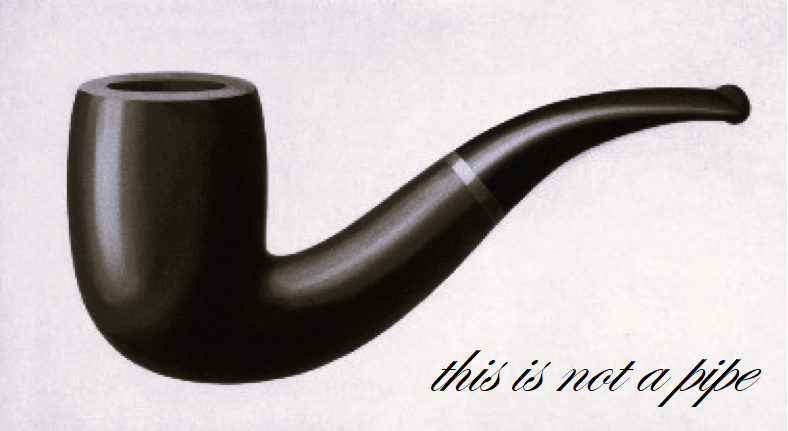
*I used the work of famous Belgium artist Rene Magritte - This is Not a Pipe, a painting that shows the image of a pipe, with the artist quote in French “Ceci n’est pas une pipe”, which translated to English means “This is not a pipe.” The work was created almost 100 years ago (1929) and reclaims its apartenance to surealism, still puzzling many viewers, showing how unlimited is the imagination and means of human expression: we can all understand both that this is a pipe and it is not - in the same time.

Notes:
*
Gods of Management – The Changing Work of Organizations, by Charles Handy, a British management consultant, teacher writer and broadcaster, who linked four different types of organizational culture with four personality types represented by an appropriate Greek God including Zeus, Apollo, Athena and Dionysus.
*
In Search of Excellence is a book written by Tom Peters and Robert H. Waterman Jr. First published in 1982, it sold three million copies in its first four years.
The book explores the art and science of management used by several companies in the 1980s. And out of it there was a structure explainin everything: the McKinsey 7S Framework combining 3 "hard" components strategy, structure, systems) and 4 soft elements (shared values, skills, staff, style) to work to gether for excellence.
*
Esprit de corps refers to the shared sense of belonging, mutual trust, and collective pride that binds people within an organization. It is not formal loyalty or enforced alignment, but a lived commitment that emerges over time—through fairness, recognition, and the feeling that one’s contribution genuinely matters.
Sources: en.wikipedia.org/wiki/In_Search_of_Excellence
en.wikipedia.org/wiki/McKinsey_7S_Framework
https://superbusinessmanager.com/the-gods-of-management-by-charles-handy
linkedin.com/pulse/tribute-charles-handy-philosopher-management-alireza-ghezel-m1kdf